

Chili flakes and crushed red pepper might seem interchangeable, but they each bring unique flavors and heat levels to the table. Understanding the differences between these two popular spice options can elevate any dish, whether it’s a simple pasta or a complex curry.
Chili flakes, often made from dried chilies, offer a vibrant flavor profile that varies depending on the type of chili used. Crushed red pepper, on the other hand, typically combines various chili types and includes seeds, resulting in a more intense heat. By exploring their characteristics, cooks can make informed choices that enhance their culinary creations and satisfy their taste buds.
Overview of Chili Flakes and Crushed Red Pepper
Chili flakes consist of dried chili peppers that are crushed into smaller pieces. They derive unique flavors from various types of chilies, such as cayenne or Aleppo, allowing for subtle flavor variations. The heat intensity in chili flakes can range from mild to very hot, depending on the chili variety used.
Crushed red pepper, on the other hand, is a blend of different dried red chili types, often including seeds. This mixture results in a bolder flavor and increased heat. Crushed red pepper provides a heat level typically higher than that of standard chili flakes.
Both chili flakes and crushed red pepper serve as essential seasoning ingredients in many cuisines, enhancing dishes like pizzas, pastas, and stir-fries. Understanding their differences enables chefs to select the appropriate seasoning based on the desired flavor profile and heat level for each dish.
Flavor Profiles
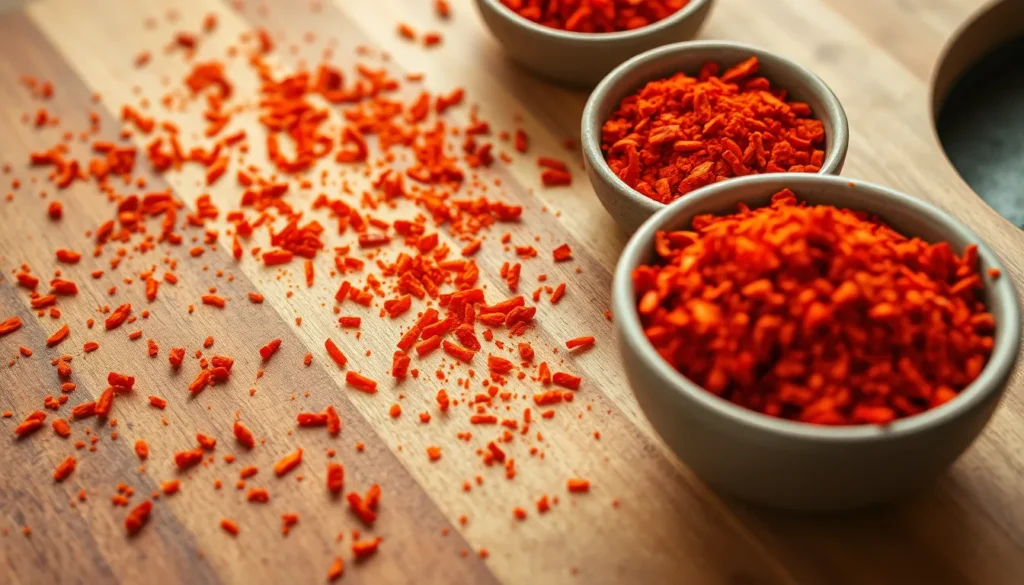
Chili flakes and crushed red pepper exhibit distinct flavor profiles that influence culinary applications. Understanding these differences aids in selecting the right ingredient to enhance various dishes.
Spice Level Comparison
Chili flakes can range from mild to very hot, depending on the type of dried chili used, such as cayenne or Aleppo. Heat levels typically fall between 30,000 to 50,000 Scoville Heat Units (SHUs). Crushed red pepper generally contains a mixture of different chili varieties, often resulting in a spice level from 15,000 to 40,000 SHUs. This blend often delivers a stronger heat due to the inclusion of seeds, which adds to the overall spiciness.
Taste Differences
Chili flakes present a vibrant flavor that’s deeply influenced by the specific types of chili, creating a unique taste experience. Subtle fruitiness may emerge from milder chilies, while hot varieties contribute bold flavors. In contrast, crushed red pepper offers a more robust, often smokier taste, attributed to the variety of chilis included. The presence of seeds amplifies the bitterness, enhancing the overall complexity of flavor in dishes.
Culinary Uses
Chili flakes and crushed red pepper serve as essential ingredients in a wide array of dishes, enhancing flavors and adding heat. Understanding where to use each can elevate the culinary experience.
Dishes That Benefit from Chili Flakes
- Pasta Dishes: Chili flakes infuse a vibrant heat into pasta sauces, complementing tomato-based recipes and creamy sauces alike.
- Pizza: Sprinkling chili flakes over pizza gives a spicy kick that pairs well with various toppings, from pepperoni to vegetables.
- Stews and Soups: Adding chili flakes to stews and soups deepens flavor and adds a warming spice, perfect for chilly days.
- Salads: A dash of chili flakes enhances salad dressings, introducing complexity and a surprising heat to fresh greens.
- Marinades: Incorporating chili flakes into marinades for meats and vegetables provides an aromatic touch, resulting in bold flavors after grilling or roasting.
Dishes That Benefit from Crushed Red Pepper
- Stir-Fries: Crushed red pepper lends a robust heat to stir-fries, balancing sweet and savory flavors in dishes with mixed vegetables and proteins.
- Fried Foods: Tossing crushed red pepper with fried foods like chicken wings or calamari amps up the snack appeal, providing an irresistible crunch and spice.
- Chili and Stews: This ingredient’s blend of various chilies contributes to a deeper, bolder taste in chili recipes, enhancing both meat and vegetarian versions.
- Dip and Sauce Enhancers: Mixing crushed red pepper into dips and sauces, such as salsa or hummus, adds heat and flavor complexity, making them more enticing.
- Savory Breads: Incorporating crushed red pepper into bread dough or sprinkling on top enhances flavor profiles in focaccia or flatbreads, offering an unexpected kick.
Nutritional Value
Chili flakes and crushed red pepper both offer unique nutritional profiles, contributing beneficial compounds and flavor enhancement to various dishes. Understanding their nutrient content aids in selecting the appropriate ingredient for culinary uses.
Comparison of Nutrients
| Nutrient | Chili Flakes (per 1 tsp) | Crushed Red Pepper (per 1 tsp) |
|---|---|---|
| Calories | 6 | 6 |
| Total Fat (g) | 0.3 | 0.3 |
| Carbohydrates (g) | 1.3 | 1.2 |
| Dietary Fiber (g) | 0.5 | 0.6 |
| Protein (g) | 0.2 | 0.3 |
| Vitamin A (% DV) | 7% | 4% |
| Vitamin C (% DV) | 1% | 2% |
| Iron (% DV) | 2% | 1% |
Chili flakes generally contain higher amounts of Vitamin A, contributing to vision and immune function, while crushed red pepper provides a slight edge in Vitamin C content. Both ingredients maintain similar calorie and macronutrient levels, making them versatile options in cooking.
Health Benefits
Chili flakes and crushed red pepper offer numerous health benefits beyond flavor enhancement.
- Antioxidant Properties: Both contain capsaicin, known for its antioxidant effects, which help combat oxidative stress and inflammation.
- Metabolic Boost: Capsaicin may elevate metabolism, promoting calorie burning.
- Pain Relief: Topical application of capsaicin can reduce pain perception, often used in ointments.
- Digestive Aid: Consuming moderate amounts can stimulate digestion and improve gut health.
Incorporating chili flakes or crushed red pepper into meals not only enhances flavor but supports overall health, making them valuable additions to any diet.
Choosing the Right Option
Selecting between chili flakes and crushed red pepper involves understanding their unique qualities. Chili flakes bring a vibrant flavor that varies widely with different chili types. With heat levels ranging from 30,000 to 50,000 Scoville Heat Units, they suit dishes requiring controlled heat and nuanced flavors. Chili flakes fit well in pasta dishes, stews, and marinades.
Crushed red pepper, with heat levels typically ranging from 15,000 to 40,000 SHUs, offers a bolder flavor profile due to its blend of different chilies and inclusion of seeds. This blend imparts a smokier, slightly bitter taste. Crushed red pepper excels in stir-fries, fried foods, and chili recipes, where its heat can enhance the overall dish’s depth.
Consider the intended culinary application when choosing between the two. For subtlety and complexity, go with chili flakes. If a stronger heat and robust flavor are desired, choose crushed red pepper. Matching the ingredient to the dish’s requirements enhances flavor profiles and overall dining experiences.
Chili flakes and crushed red pepper each bring distinct flavors and heat levels to the table. Choosing between them depends on the desired culinary outcome. Chili flakes are perfect for those seeking a vibrant flavor with varying heat, while crushed red pepper offers a bolder, smokier taste for dishes that call for more intensity.
Incorporating these ingredients thoughtfully can elevate meals and enhance overall flavor profiles. Whether it’s a delicate pasta or a hearty stir-fry, understanding the unique qualities of chili flakes and crushed red pepper allows cooks to make informed choices that delight the palate. Both ingredients not only enrich dishes but also contribute valuable health benefits, making them must-haves in any kitchen.