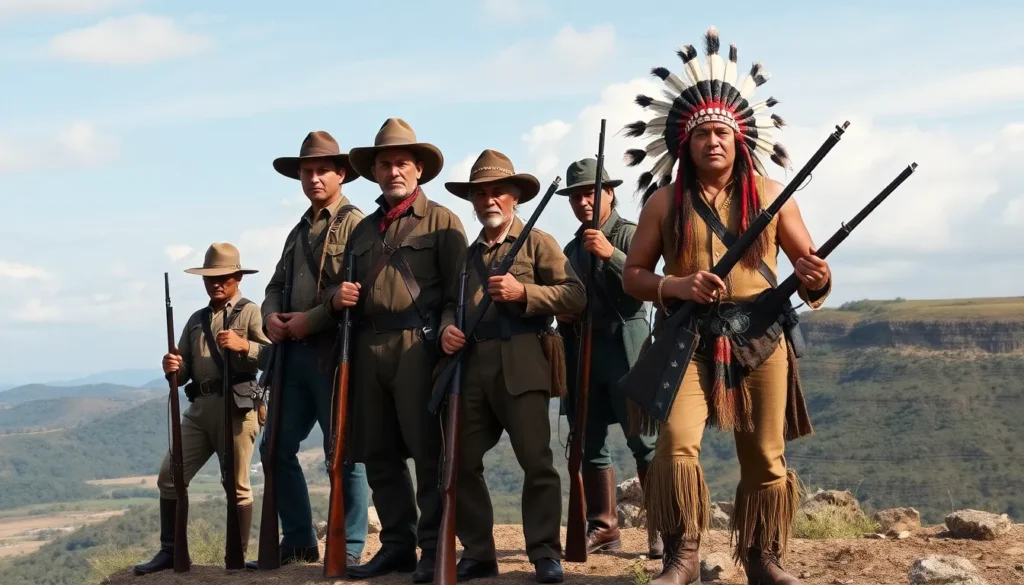

The Rough Riders captured the imagination of a nation during the Spanish-American War. Formed in 1898, this diverse cavalry unit was led by Theodore Roosevelt and consisted of cowboys, miners, and college athletes. Their daring exploits in Cuba not only showcased their bravery but also marked a significant chapter in American military history.
These unconventional soldiers became legends through their audacious charge up San Juan Hill. The Rough Riders embodied the spirit of adventure and camaraderie, representing a unique blend of backgrounds and skills. Their story continues to resonate, highlighting themes of heroism and patriotism that shaped the United States during a pivotal era.
The Rough Riders: An Overview
The Rough Riders, officially known as the 1st United States Volunteer Cavalry, formed in May 1898. Theodore Roosevelt led this unit during the Spanish-American War, which played a pivotal role in American military history. Comprised of approximately 1,000 men, the Rough Riders included cowboys, miners, college athletes, and Native Americans, reflecting a blend of diverse backgrounds and experiences.
The most notable event featuring the Rough Riders occurred during the Battle of San Juan Hill on July 1, 1898. In a daring charge, the unit helped secure a crucial victory for American forces. Their bravery and effective combat tactics contributed significantly to the overall success of the campaign. Roosevelt’s leadership during this battle elevated him to national fame, leading to his eventual election as Vice President.
The Rough Riders’ legacy persists, symbolizing courage, camaraderie, and patriotism. Their story continues to resonate in American culture, representing the spirit of adventure and the valor of individuals serving their country.
Origins of the Rough Riders
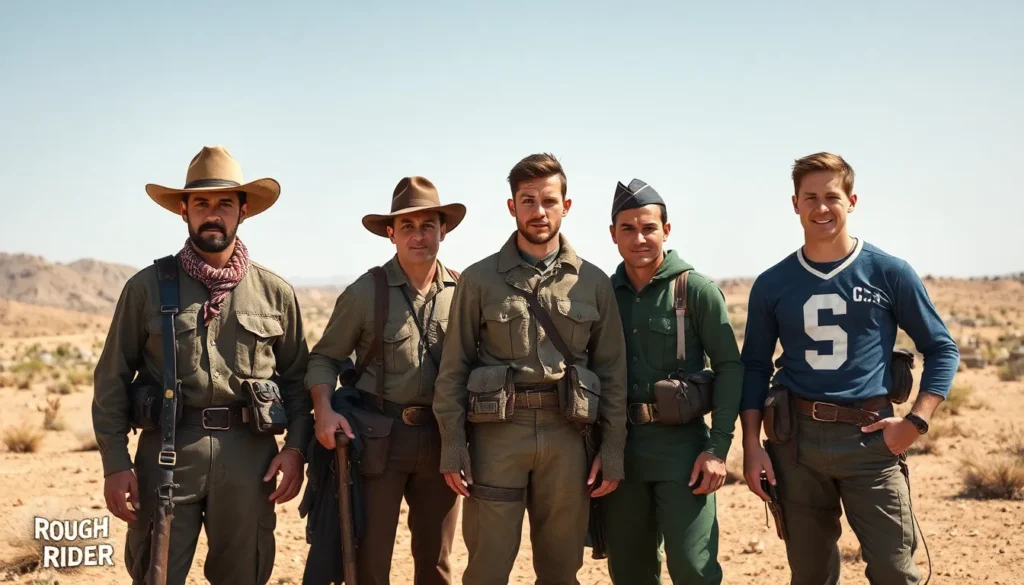
The Rough Riders, formally known as the 1st United States Volunteer Cavalry, originated during the heightened tensions leading to the Spanish-American War. Their formation marked a significant moment in military history, uniting men from various backgrounds to serve a common cause.
Formation and Leadership
The Rough Riders formed in May 1898, primarily in response to President William McKinley’s call for volunteers. Theodore Roosevelt, then Assistant Secretary of the Navy, played a pivotal role in the unit’s establishment and served as its lieutenant colonel. Roosevelt recruited an eclectic group of individuals, including cowboys, miners, and college athletes, aiming to create a cavalry uniquely equipped for the challenges of warm-weather warfare. This diverse leadership structure fostered unity and camaraderie among the volunteers.
Background of Members
Members of the Rough Riders came from varied backgrounds, reflecting the American frontier’s spirit. Approximately 1,000 men joined the unit, with many having lived intensely adventurous lives. Cowboys, who possessed exceptional riding skills, brought knowledge of challenging terrains. Miners contributed their experiences from harsh conditions and remote locations. College athletes added physical prowess and strategic thinking, while Native Americans provided insightful wilderness expertise. This blend of skills and backgrounds created a cohesive force capable of tackling the complexities of modern warfare while embodying the ideals of bravery and patriotism.
Major Events and Battles
The Rough Riders participated in several key engagements during the Spanish-American War, with their most famous battle being at San Juan Hill. These events highlight their bravery and strategic significance.
The Battle of San Juan Hill
The Battle of San Juan Hill occurred on July 1, 1898, and became a defining moment for the Rough Riders. Led by Theodore Roosevelt, the unit charged up the hill under heavy fire from Spanish forces. Their swift advance, combined with the efforts of other regiments, resulted in a crucial American victory. This battle showcased the tenacity and courage of the Rough Riders, ultimately elevating Roosevelt to a national hero. Approximately 1,000 soldiers engaged in fierce combat, with many Rough Riders sustaining injuries, yet the successful charge was pivotal in the overall campaign in Cuba.
Other Key Engagements
After San Juan Hill, the Rough Riders continued to participate in significant military actions, contributing to the war effort in various capacities.
- Battle of Kettle Hill: Fought concurrently with San Juan Hill, this engagement involved Rough Riders against entrenched Spanish positions. The strategic capture of Kettle Hill helped secure American control of San Juan Heights.
- Siege of Santiago: Throughout the siege, Rough Riders endured long periods of waiting and skirmishes. Their involvement in the blockade contributed to the eventual surrender of Santiago de Cuba on July 17, 1898, marking a critical victory in the war.
- Battle of Las Guasimas: Occurring on June 24, 1898, this battle saw Rough Riders and other troops provide support against Spanish defenses. Their effective maneuvers were crucial in offsetting Spanish counterattacks.
These engagements not only solidified the Rough Riders’ legacy but also underscored their crucial role in the Spanish-American War, enhancing their reputation as a courageous and effective fighting force.
Legacy and Impact
The Rough Riders left a significant legacy, influencing military history and American culture in various ways. Their diverse composition and extraordinary actions during the Spanish-American War continue to resonate today.
Contributions to Military History
The Rough Riders played a crucial role in the evolution of American military tactics. Their operational effectiveness in warm-weather warfare set standards for future volunteer units. The charge at the Battle of San Juan Hill demonstrated the impact of rapid movement and combined arms, integrating infantry and cavalry strategies. This engagement not only contributed to the United States’ victory but also influenced military doctrines in subsequent conflicts. Studies of the Rough Riders’ strategies provide valuable lessons in leadership, adaptability, and teamwork, essential components of modern military training programs. The unit’s experience emphasized the importance of morale and unity in diverse groups, shaping recruitment and organization practices in the years following the war.
Cultural Representations
Cultural depictions of the Rough Riders illustrate their enduring impact on American identity. The unit has been represented in numerous films, books, and documentaries, often idealizing their bravery and heroism. This portrayal fosters a narrative of courage that appeals to national pride. Iconic figures like Theodore Roosevelt are highlighted, showcasing their influence on American history and politics. The Rough Riders inspired various commemorations, including memorials and reenactments, reinforcing their status as symbols of valor. These representations not only celebrate their contributions during the Spanish-American War but also serve as reminders of the ideals of duty and sacrifice that resonate in contemporary society.
The Rough Riders represent a unique chapter in American military history. Their diverse composition and unwavering bravery during the Spanish-American War left an indelible mark on the nation’s identity. Led by Theodore Roosevelt, they showcased the power of unity and teamwork in the face of adversity.
Their legacy extends beyond the battlefield, influencing military strategies and inspiring countless narratives of heroism. The Rough Riders’ story continues to resonate, reminding future generations of the values of courage, sacrifice, and patriotism. This remarkable unit not only shaped the course of the war but also became a symbol of American spirit and resilience.